





Introduction
In an educational landscape increasingly dominated by technology, the demand for effective tools to introduce children to foundational STEM concepts, particularly coding, has never been higher. The RoboCode Explorer Kit positions itself as a comprehensive, engaging solution designed to bring tangible coding experiences into American homes. This review will meticulously dissect the Explorer Kit, evaluating its pedagogical approach, feature set, user experience, and overall value proposition for aspiring young programmers.
Product Overview: Unpacking the RoboCode Explorer Kit
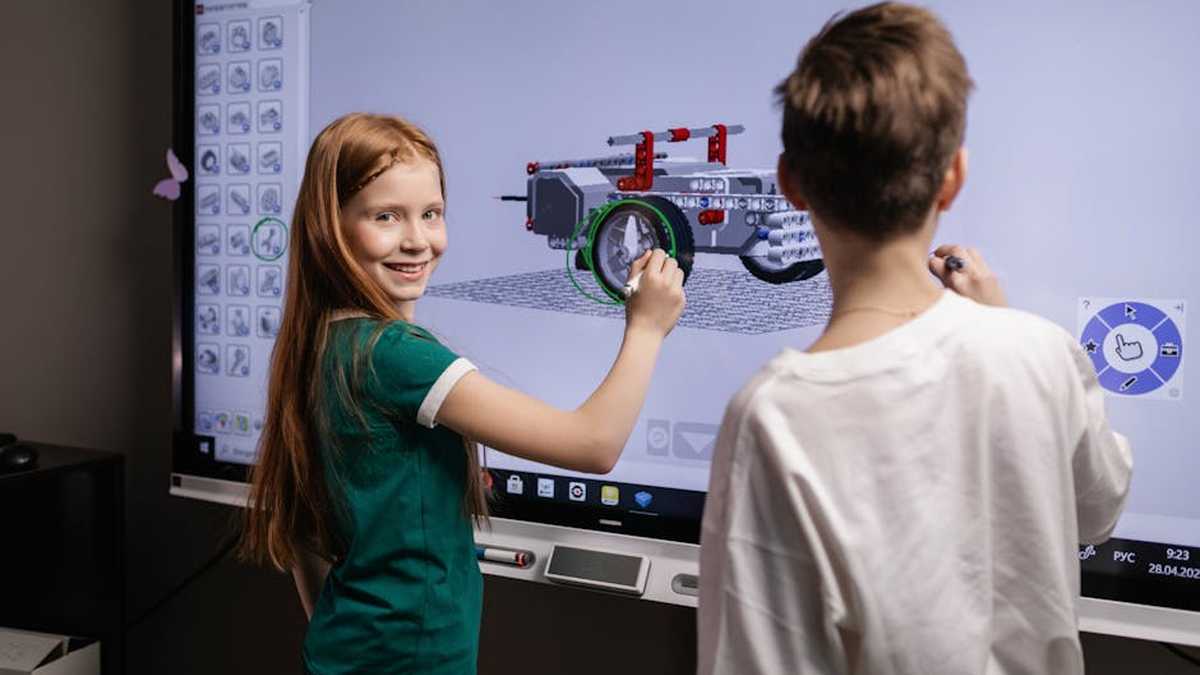
The RoboCode Explorer Kit is a modular robotics and coding system tailored for children aged 8 and up. It transitions coding from an abstract concept on a screen to a physical, interactive experience. The kit typically includes a central programmable robot unit, various attachable sensors (e.g., line-following, obstacle detection), actuators (motors, LEDs), and a suite of building components. Its core philosophy revolves around block-based visual programming, familiar to users of Scratch or similar platforms, which then seamlessly translates into controlling the physical robot. The goal is to demystify robotics and computational thinking through hands-on experimentation and project-based learning, moving beyond mere screen time to active problem-solving.
Key Features and Pedagogical Strengths
- Intuitive Block-Based Coding Interface: Utilizes a drag-and-drop visual programming language that mirrors professional coding logic, making it accessible for beginners while still teaching fundamental concepts like loops, conditionals, and variables.
- Modular Robotics Design: Components are easily attachable and detachable, encouraging creative construction and rapid iteration of robot designs. This fosters engineering design principles alongside coding.
- Comprehensive Curriculum and Project Guides: Bundled with a series of guided projects and challenges that progress in complexity, ensuring a structured learning path from basic movement to advanced sensor-based automation.
- Real-World Sensor Integration: Includes an array of sensors (e.g., ultrasonic for distance, IR for line-following, light sensor) allowing children to program robots to interact with their environment in meaningful ways.
- Durable and Child-Safe Construction: Components are designed to withstand typical child’s play, featuring robust plastics and secure connections suitable for repeated assembly and disassembly.
- Cross-Platform Compatibility: Companion app and software are generally compatible with major operating systems (Windows, macOS, iOS, Android), ensuring broad accessibility across household devices.
Pros:
- Exceptional Engagement: The tangible nature of robotics significantly boosts engagement compared to purely screen-based coding tutorials, turning abstract concepts into visible actions.
- Progressive Learning Curve: Carefully designed curriculum allows children to master basics before advancing to more complex concepts, minimizing frustration and sustaining interest.
- Fosters Critical Thinking & Problem-Solving: Challenges necessitate iterative design, debugging, and creative solutions, directly honing computational thinking skills.
- Strong STEM Foundation: Integrates principles of computer science, engineering, and even basic physics in a fun, accessible format.
- High Replayability: The open-ended nature of the kit means kids can continuously design new robots and solve new challenges beyond the provided curriculum.
- Robust Community & Support: Often backed by online resources, user communities, and responsive customer support, enhancing the long-term learning experience.
Cons:
- Initial Learning Curve for Parents: While child-friendly, parents unfamiliar with coding may need to invest a little time to grasp the system’s full potential to guide younger children effectively.
- Screen Time Dependency (Setup & Coding): Although the robot is physical, initial setup, programming, and monitoring largely occur via a tablet or computer, which might be a consideration for some families.
- Cost Consideration: Positioned as a premium educational toy, its upfront cost may be a significant investment for some households.
- Potential for Component Loss: With many small modular parts, there’s a possibility of components being misplaced if not properly organized.
Who Should Buy the RoboCode Explorer Kit?
The RoboCode Explorer Kit is an excellent investment for: Related: Best Interactive STEM Kits for Young Innovators in USA (2026)
- Parents seeking a hands-on STEM experience: Ideal for families who prioritize practical, tangible learning over purely digital interactions.
- Children aged 8-14 with nascent curiosity about coding or robotics: Its progressive design caters well to this age group, sparking and nurturing interest.
- Educators or homeschooling parents: A valuable resource for supplementary STEM education, offering structured lessons and project-based learning opportunities.
- Gift-givers looking for an impactful, educational present: Stands out as a gift that combines fun with significant skill development.
- Families already familiar with visual programming (e.g., Scratch users): The transition to the RoboCode interface will be seamless, allowing immediate focus on robotics.
Who Should Avoid the RoboCode Explorer Kit?
This kit might not be the best fit for: Related: TerraBot Explorer Kit Review: Is This Top-Selling STEM Robot Worth It for USA Kids (Ages 7-10)?
- Families with very tight budgets: The premium pricing might be prohibitive.
- Children under 7: While some might manage, the complexity of construction and programming concepts may be too advanced without significant adult intervention.
- Those strictly avoiding screen time: Although physical, screen interaction is integral for programming and project guidance.
- Individuals expecting instant gratification without effort: Like any real learning, mastering robotics and coding requires patience and persistence.
Pricing Insight: Understanding the Investment
The RoboCode Explorer Kit is positioned at the higher end of the educational robotics toy market, a reflection of its robust build quality, comprehensive curriculum, and sophisticated technology. This pricing strategy places it as a significant educational investment rather than an impulse purchase. Consumers should anticipate a price point commensurate with a durable, multi-year learning tool, often comparable to high-end video game consoles or premium learning tablets. Occasional promotions, holiday sales, or bundled offers may present opportunities for savings. While the initial outlay is notable, the long-term value derived from sustained engagement, skill development, and reusability often justifies the expenditure for committed families. Related: Best AI-Powered STEM Toys for Future-Ready Kids in USA (2026)
Comparison with a Leading Alternative: RoboCode Explorer Kit vs. Sphero BOLT
To contextualize the RoboCode Explorer Kit’s position, let’s consider the Sphero BOLT, another prominent programmable robot designed for similar age groups. Both products aim to teach coding through robotics, but their approaches differ significantly. Related: My Kids Tested the ‘MindSpark Quantum Circuit Kit’: Is This The Hottest STEM Toy for Ages 8-12 in 2024? (Full Review)
- Form Factor & Customization: The RoboCode Explorer Kit emphasizes modular construction with various physical components that attach to a base, allowing for diverse robot configurations (e.g., a car, an arm, a sensor array). This fosters a strong engineering and design element. The Sphero BOLT, conversely, is a self-contained, spherical robot. Its appeal lies in its compact, durable design and unique gyroscopic movement. While it offers LED matrix customization and internal sensor data, it lacks the physical modularity for building different robot bodies.
- Coding Environment: Both utilize block-based coding, with Sphero offering the intuitive “Draw & Drive,” “Blocks,” and JavaScript text programming (for advanced users) within its Edu app. RoboCode’s environment often feels more integrated with its physical components, with a strong focus on project-based learning tied directly to the kit’s parts.
- Sensors & Interaction: Both have robust sensor arrays. Sphero BOLT is known for its infrared communication (allowing robot-to-robot interaction), ambient light sensor, gyroscope, and accelerometer. RoboCode’s kit typically provides a wider array of external attachable sensors (ultrasonic, line follower, touch, etc.) that encourage children to understand how different inputs can modify robot behavior in varying scenarios.
- Learning Focus: RoboCode places a heavier emphasis on the mechanics of building and how those constructions interact with code, making it an excellent bridge between computer science and mechanical engineering. Sphero BOLT often leans into physics-based exploration, autonomous behavior, and creative programming challenges within its spherical form.
- Price Point: Both are premium products. The RoboCode Explorer Kit, with its multitude of physical parts and comprehensive curriculum, might sometimes have a slightly higher entry point due to its expansive hardware. Sphero BOLT offers a more contained, albeit highly capable, experience.
Ultimately, the choice between the two depends on the desired learning emphasis. For families prioritizing hands-on construction, engineering design, and understanding diverse physical sensor applications, the RoboCode Explorer Kit holds an edge. For those seeking a highly durable, compact, and versatile programmable sphere focused on movement, autonomous behavior, and perhaps introductory JavaScript, Sphero BOLT is a compelling alternative. Related: Best-Selling Interactive STEM Kits & Educational Board Games in USA (2026)
Final Verdict
The RoboCode Explorer Kit stands out as a formidable educational tool in the competitive STEM toy market. Its blend of intuitive block-based coding, robust modular hardware, and a well-structured project curriculum creates a highly engaging and effective learning environment. It successfully bridges the gap between abstract coding concepts and tangible robotic outputs, providing children with a deep understanding of computational thinking, engineering principles, and problem-solving methodologies.
While representing a notable financial investment and requiring some parental involvement, the educational returns and long-term engagement potential are substantial. For parents in the USA committed to providing their children with foundational 21st-century skills through an exciting, hands-on medium, the RoboCode Explorer Kit is an unequivocally recommended product. It’s more than just a toy; it’s an accessible gateway to a future built on innovation and technology.