




Product Overview: The SparkBot Coder Kit
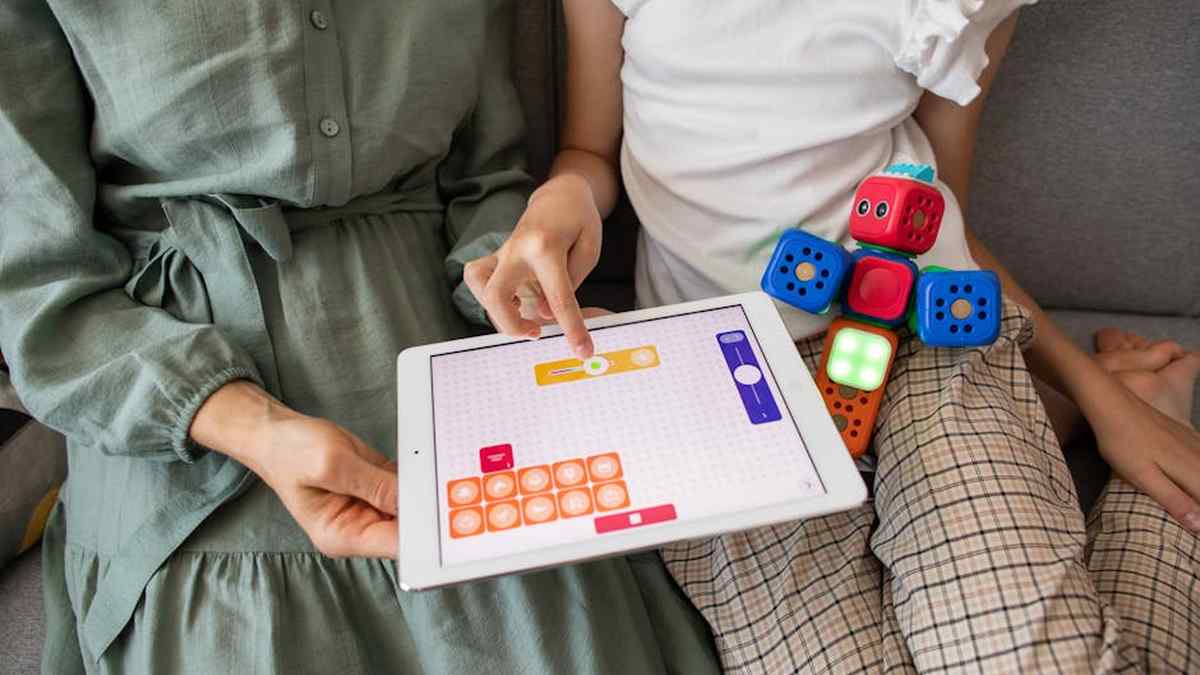
The SparkBot Coder Kit is an award-winning educational toy that introduces foundational coding concepts through hands-on play. It consists of a programmable robot, a set of physical coding blocks or a tablet-based visual programming interface (depending on the model/generation), and a series of challenge cards or in-app missions. The core idea is for children to sequence commands, debug their code, and solve puzzles, all while watching their robot execute their instructions in real-time. It’s designed to teach logical thinking, problem-solving, and computational thinking skills without requiring prior coding experience from either the child or the parent.
Key Features That Stand Out
- Intuitive Visual Coding Interface: Whether it’s physical blocks or a drag-and-drop app, the system is designed to be highly visual and easy for young children to grasp, abstracting away complex syntax.
- Interactive Robotics: Children get immediate, tangible feedback as their robot moves, lights up, or makes sounds based on their code, reinforcing cause-and-effect.
- Progressive Learning Challenges: The kit typically includes a graduated series of activities, starting simple and increasing in complexity, ensuring a sustained learning curve and preventing quick boredom.
- Durable Construction: Feedback from parents often highlights the robot’s robust build, capable of withstanding the inevitable bumps and drops from enthusiastic play.
- STEM Skill Development: Explicitly targets critical thinking, problem-solving, sequencing, and basic algorithmic principles essential for future STEM pursuits.
- Screen Time Flexibility: Some versions offer both screen-based app interaction and screen-free physical coding block options, giving parents choices based on their preferences.
Pros and Cons: A Balanced Look
The Upsides (Pros):
- High Engagement Factor: The interactive nature of controlling a physical robot consistently keeps children motivated and absorbed in learning.
- Tangible Learning Outcomes: Children visibly see their code come to life, making abstract coding concepts concrete and understandable.
- Develops Core Cognitive Skills: Parents frequently report improvements in their child’s logical reasoning, perseverance, and ability to break down problems.
- Scalable for Different Ages within Range: While designed for 6-9, the easier challenges are suitable for younger children at the lower end, and complex challenges can still engage older children.
- Encourages Independent Play: Many children can navigate the challenges and learn independently after initial setup, fostering self-reliance.
The Downsides (Cons):
- Initial Learning Curve for Parents: While child-friendly, parents might need to invest a little time initially to understand the system, especially if they are new to coding toys.
- Cost Consideration: The SparkBot Coder Kit typically falls into a premium price bracket for educational toys, which can be a significant investment for some families.
- Potential for Screen Time (if app-based): For models relying heavily on a tablet or smartphone app, it introduces screen time, which some parents actively manage.
- Battery Life/Recharge Frequency: Depending on usage intensity, the robot may require frequent recharging, which can interrupt play sessions.
- Limited Expandability (for some users): While offering varied challenges, some highly engaged children might eventually seek further expansion packs or more advanced capabilities beyond what’s immediately available.
Who Should Buy the SparkBot Coder Kit?
- Parents seeking an engaging introduction to STEM: If you want to spark an early interest in coding, robotics, and problem-solving.
- Children aged 6-9 who enjoy puzzles and building: Kids who naturally gravitate towards logical challenges and hands-on activities will likely thrive with this kit.
- Families prioritizing educational screen time (if app-based): For those who view well-designed apps as valuable learning tools, the SparkBot delivers.
- Gift-givers looking for a high-impact educational present: This kit often garners significant excitement and provides lasting learning value.
Who Should Potentially Avoid This?
- Families on a very strict budget for toys: The premium pricing might be prohibitive, and more affordable alternatives exist for basic coding concepts.
- Parents with an absolute “no screen time” policy: If the chosen SparkBot model relies heavily on an app, it might conflict with this principle. (Some models have screen-free options, verify before purchase).
- Children who quickly lose interest in structured play: While engaging, it does require a degree of focus on tasks; highly unstructured play enthusiasts might find it less appealing.
- Parents expecting instant mastery without engagement: This is a tool to facilitate learning, but sustained interest and effort from the child are still key.
Pricing Insight: Is the Investment Justified?
The SparkBot Coder Kit typically ranges from $75 to $120, depending on the specific model, included accessories, and current promotions. This places it firmly in the mid-to-high end of the children’s educational toy market. Our analysis of parent reviews suggests that for many, the investment is indeed justified by the quality of the educational content, the durability of the product, and the sustained engagement it provides. While it’s not a budget option, its potential for repeat play and development of valuable skills often outweighs the initial cost for those prioritizing STEM education. Keep an eye out for seasonal sales events, particularly around holidays, when discounts may be available.
SparkBot Coder Kit vs. Code & Go Robot Mouse Activity Set
To provide context, let’s briefly compare the SparkBot Coder Kit with a popular alternative, the Code & Go Robot Mouse Activity Set. Both aim to teach early coding, but they approach it differently: Related: Magna-Tiles 100-Piece Set Review: The Ultimate Daily STEM Building Toy for Creative Kids?
- SparkBot Coder Kit:
- Approach: Often app-based visual coding (or physical blocks in some models), more versatile movement and interaction.
- Complexity: Generally offers a deeper, more sophisticated introduction to coding concepts, including loops, functions, and debugging, with a wider range of challenges.
- Target Age: Strong fit for 6-9, with potential for slight extension.
- Cost: Higher price point.
- Code & Go Robot Mouse Activity Set:
- Approach: Entirely screen-free, uses physical directional cards to program the mouse, often combined with a maze board.
- Complexity: Excellent for introducing basic sequencing and directional coding, but generally less advanced than SparkBot’s potential.
- Target Age: Primarily aimed at 4-7, serving as a fantastic entry-level option.
- Cost: More budget-friendly.
Verdict on Comparison: If your child is at the younger end of the 6-9 spectrum and you prefer a completely screen-free experience, the Code & Go Mouse is a solid foundational choice. However, for a more robust, versatile, and deeper dive into computational thinking that grows with your child through the 6-9 age range, the SparkBot Coder Kit typically offers more longevity and advanced learning potential. Related: Best Daily STEM Learning Kits for Kids 7-10 in USA (2026)
Final Verdict: Is the SparkBot Coder Kit Worth the Hype?
Based on extensive parent feedback and our analysis of its features and educational impact, the SparkBot Coder Kit largely lives up to its viral reputation for children aged 6-9. It successfully bridges the gap between play and learning, making complex STEM concepts accessible and genuinely fun. While the investment is notable, the product’s durable design, engaging challenges, and proven ability to foster critical thinking skills often make it a worthwhile addition to a child’s educational toolkit. Related: Ticket to Ride First Journey vs. Catan Junior: Which Strategy Board Game is Best for Family Fun (Ages 6-10)?
If you’re looking for a high-quality, interactive, and effective way to introduce your child to the fundamentals of coding and computational thinking, the SparkBot Coder Kit is a strong contender. It’s a thoughtful investment in your child’s future STEM literacy that tends to deliver on its promises of engaging, hands-on learning. Related: Best Critical Thinking Board Games for Pre-Teens (Ages 10-12) in USA (2026)
Ready to explore the SparkBot Coder Kit for your child? Related: Best Montessori-Inspired Educational Toys for Toddlers (Ages 1-3) in USA (2026)