





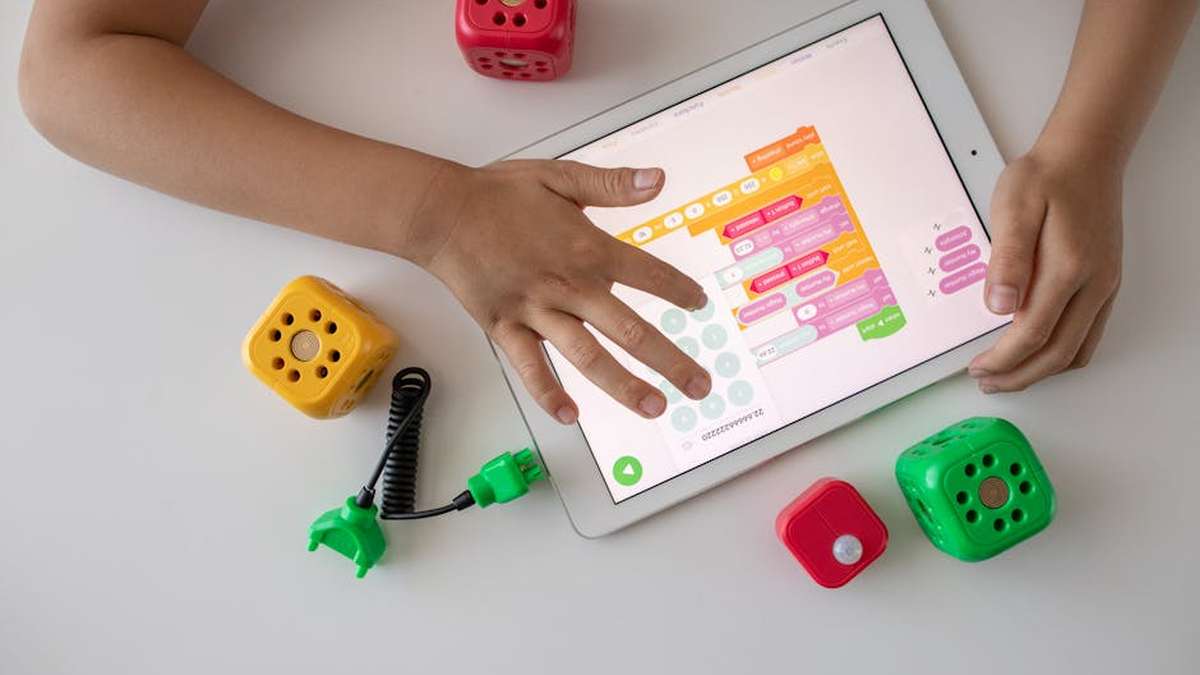
Igniting Young Minds: The Essential Guide to Coding Robots for Preschoolers
In an increasingly digital world, introducing foundational STEM concepts early can significantly benefit a child’s cognitive development. For preschoolers in the USA, interactive coding robots offer an engaging, hands-on pathway into problem-solving, logical thinking, and early programming principles. Far from complex machines, these child-friendly devices are designed to make learning intuitive and fun, often without requiring screens. This professional buyer’s guide for 2026 meticulously evaluates the top-rated coding robots, helping parents and educators make informed decisions to foster a love for learning in the crucial early years.
Comparison Table: Top Interactive Coding Robots for Preschoolers
| Product | Age Range | Key Feature | Price Range (USD) |
|---|---|---|---|
| Fisher-Price Code & Go Robot Mouse Activity Set | 4-6 years | Screen-free, tactile directional coding | $30 – $50 |
| Learning Resources Botley the Coding Robot 2.0 Activity Set | 4-7 years | Advanced screen-free sequencing, object detection | $70 – $100 |
| Wonder Workshop Dash Robot | 5-8 years (with apps for 5+) | App-enabled, highly expressive, accessory integration | $150 – $200 |
| Artie 3000 The Coding Robot | 4-7 years | Draws coded designs, Wi-Fi enabled, browser-based | $70 – $100 |
| Osmo Coding Starter Kit with Awbie | 5-10 years (core play 5+) | Tangible block coding, interactive iPad games | $80 – $120 |
| Sphero indi Student Kit | 4-7 years | Screen-free color-tile coding, app optional | $100 – $150 |
| ThinkFun Code Master Programming Logic Game | 5-8 years | Board game format, single-player logical puzzle solving | $20 – $35 |
Fisher-Price Code & Go Robot Mouse Activity Set
A classic and beloved entry point into coding, the Code & Go Robot Mouse offers a completely screen-free experience that emphasizes tactile learning and sequential thinking.
Key Features:
- Programmable robot mouse with lights and sounds.
- Maze grid boards, walls, and tunnel pieces for creating custom paths.
- 30 coding cards to help plan routes.
- Encourages critical thinking and problem-solving through trial and error.
Pros:
- Completely screen-free, ideal for minimizing digital exposure.
- Highly durable components designed for young children.
- Promotes hands-on, tangible understanding of cause and effect.
- Excellent for spatial reasoning and sequencing.
Cons:
- Complexity is limited, potentially outgrown by older preschoolers.
- Repetitive play might occur without additional maze packs.
Best For: The youngest preschoolers (4-5 years old) or parents prioritizing screen-free educational toys. It’s an excellent first step into directional coding concepts. Related: Best Amazon Viral Interactive Learning Toys for Toddlers (Ages 1-3) in USA (2026)
Price Range: Typically priced between $30 – $50. Related: KiwiCo vs. MEL Science Kits: The Ultimate USA Parent’s Guide to Amazon’s Top STEM Subscription Boxes
For a deeper dive into the Fisher-Price Code & Go Robot Mouse Activity Set’s capabilities and current pricing, click here to explore its official listing. Related: Most Engaging Screen-Free Interactive Toys for Toddlers in USA (2026)
Learning Resources Botley the Coding Robot 2.0 Activity Set
Botley 2.0 elevates the screen-free coding experience with more advanced features, allowing children to program longer sequences and interact with the environment. Related: Ticket to Ride First Journey vs. My First Carcassonne: Which Amazon Board Game Builds Better Strategic Skills for USA Kids?
Key Features:
- Enhanced object detection capabilities and black-line following.
- Programmable up to 150 steps in one sequence.
- Hidden features to unlock, transforming Botley into various objects.
- Includes a 77-piece activity set with coding cards, obstacles, and more.
Pros:
- Offers a significant step up in complexity from basic screen-free robots without requiring an app.
- Teaches advanced concepts like loops, if/then logic, and basic debugging.
- Engaging and versatile, providing many hours of play.
- Robust construction suitable for classroom and home use.
Cons:
- Can be slightly overwhelming for the youngest preschoolers without guidance.
- Requires 5 AAA batteries (not included), which can drain quickly with heavy use.
Best For: Preschoolers aged 4-7 who are ready for more complex screen-free challenges and parents seeking a durable, versatile coding tool. Related: LEGO Mindstorms EV3 vs. Spike Prime: Which Robotics Kit is Best for Advanced STEM Learning (Ages 10+)?
Price Range: Typically priced between $70 – $100.
For a deeper dive into the Learning Resources Botley the Coding Robot 2.0 Activity Set’s capabilities and current pricing, click here to explore its official listing.
Wonder Workshop Dash Robot
The Dash Robot is a highly expressive and interactive robot that brings block-based coding to life through various apps, growing with the child’s skills from simple movements to complex sequences.
Key Features:
- Responds to voice, navigates objects, dances, and sings.
- Multiple award-winning apps (Go, Path, Xylo, Blockly) cater to different skill levels.
- Built-in sensors for light, sound, and distance detection.
- Compatible with various accessories (e.g., xylophone, launcher) for extended play.
Pros:
- Extremely engaging and charismatic, fostering a strong connection with children.
- Scalable learning curve through multiple apps, suitable for preschoolers up to early elementary.
- Excellent introduction to app-based block coding environments.
- Durable design and continuous software updates.
Cons:
- Requires a compatible tablet or smartphone (not included).
- Higher price point than many other preschool coding robots.
Best For: Preschoolers (5+) ready for app-enabled interaction and seeking a robot that offers long-term engagement and a wide range of coding challenges.
Price Range: Typically priced between $150 – $200.
For a deeper dive into the Wonder Workshop Dash Robot’s capabilities and current pricing, click here to explore its official listing.
Artie 3000 The Coding Robot
Artie 3000 uniquely combines coding with creativity, allowing children to program drawings using a simple visual interface accessible from any Wi-Fi enabled device.
Key Features:
- Draws coded designs on paper using a built-in marker.
- Wi-Fi enabled, creating its own network for connection (no internet required for play).
- Browser-based interface for coding, supporting drag-and-drop Blockly, Python, and JavaScript (Blockly suitable for preschoolers).
- Comes with pre-coded designs and blank paper for custom creations.
Pros:
- Engaging visual output makes abstract coding concepts tangible and rewarding.
- No app download required, making it easy to set up and use across multiple devices.
- Encourages creativity and artistic expression alongside logical thinking.
- Grows with the child, offering more advanced coding languages for older users.
Cons:
- Requires a device (computer, tablet, smartphone) to program.
- Requires a flat, clear surface for optimal drawing performance.
- Markers can dry out or need replacement.
Best For: Artistically inclined preschoolers (4-7 years) who enjoy tangible, creative results from their coding efforts and parents comfortable with a browser-based interface.
Price Range: Typically priced between $70 – $100.
For a deeper dive into the Artie 3000 The Coding Robot’s capabilities and current pricing, click here to explore its official listing.
Osmo Coding Starter Kit with Awbie
Osmo offers a unique blend of physical and digital play, using tangible coding blocks that interact with an iPad or Fire tablet to control the on-screen character Awbie.
Key Features:
- Hands-on coding blocks (walk, jump, grab, loop) for physical manipulation.
- Interactive game world where children guide Awbie to collect strawberries.
- Encourages sequential thinking, problem-solving, and conditional logic.
- Award-winning learning system with immediate visual feedback.
Pros:
- Seamless integration of physical play with digital interaction.
- Intuitive and engaging, making abstract coding concepts accessible.
- Provides immediate feedback, helping children learn from their actions.
- Promotes independent problem-solving and critical thinking.
Cons:
- Requires an iPad or Fire tablet (not included) and the Osmo base.
- Can be less portable than screen-free options.
- The Osmo base and mirror must be positioned correctly for optimal play.
Best For: Preschoolers (5+) who enjoy tablet-based games and thrive with a mix of physical and digital interaction. Excellent for learning sequential programming in a fun, game-like environment.
Price Range: Typically priced between $80 – $120.
For a deeper dive into the Osmo Coding Starter Kit with Awbie’s capabilities and current pricing, click here to explore its official listing.
Sphero indi Student Kit
The Sphero indi Student Kit offers a fresh approach to screen-free coding, utilizing color-coded tiles for intuitive, immediate programming, with an optional app for advanced challenges.
Key Features:
- Drive a robot car using physical color tiles (red stop, green go, yellow turn).
- Built-in color sensor allows indi to react to the tiles.
- Challenge cards for guided play and open-ended exploration.
- Optional app connectivity for expanded coding challenges and programming control.
Pros:
- Starts completely screen-free, making it accessible to a wide age range.
- Visual and intuitive coding system through color tiles.
- Encourages creative problem-solving and design thinking.
- Scalable, with app options for more complex programming as skills develop.
Cons:
- The car requires frequent charging.
- Color tiles need to be placed precisely for optimal recognition.
Best For: Preschoolers (4-7 years) who benefit from a tangible, immediate feedback system and parents looking for a robust STEM toy that can grow with their child, offering both screen-free and app-enabled play.
Price Range: Typically priced between $100 – $150.
For a deeper dive into the Sphero indi Student Kit’s capabilities and current pricing, click here to explore its official listing.
ThinkFun Code Master Programming Logic Game
While not a robot in the traditional sense, Code Master is an acclaimed board game that introduces core programming concepts like conditional loops and sequencing in a fun, single-player logic puzzle format.
Key Features:
- 60 challenges ranging from beginner to expert.
- Physical tokens represent coding commands (move, jump, collect).
- Teaches abstraction, sequencing, and logical problem-solving.
- Goal is to find the perfect sequence of actions to guide your Avatar to the portal.
Pros:
- Completely screen-free, enhancing focus and tactile interaction.
- Excellent for developing logical reasoning and critical thinking skills.
- Portable and easy to set up for independent play.
- Durable components designed for repeated use.
Cons:
- Lacks the physical movement and interactive robot element of other products.
- Can be challenging for the youngest preschoolers, requiring adult guidance initially.
- Designed for single-player only.
Best For: Preschoolers (5+) who enjoy puzzles and logical challenges. It’s an ideal supplementary tool to reinforce coding concepts in a board game format, especially for parents seeking an alternative to electronic toys.
Price Range: Typically priced between $20 – $35.
For a deeper dive into the ThinkFun Code Master Programming Logic Game’s capabilities and current pricing, click here to explore its official listing.
Conclusion
Introducing coding concepts to preschoolers through interactive robots is more than just fun; it’s an investment in their future readiness for an increasingly technological world. The robots reviewed here represent the pinnacle of early learning tools for 2026, each offering a unique pathway into the fundamentals of computational thinking.
Whether you choose a screen-free tactile experience, a whimsical drawing robot, or an engaging app-enabled companion, the key is to select a product that sparks curiosity and encourages exploration. By carefully considering the factors outlined in our buying guide, parents and educators can confidently select a coding robot that will not only entertain but also equip young minds with invaluable skills for success.