





Introduction
The TerraBot Explorer Kit isn’t just another toy; it’s presented as a comprehensive learning system designed to foster critical thinking, problem-solving, and foundational coding skills. For parents in the USA seeking to equip their children with future-ready capabilities, the allure of a top-selling educational robot is undeniable. This review will meticulously examine the TerraBot Explorer Kit from multiple angles, assessing its features, educational value, practicality, and overall worth for its target demographic.
Product Overview
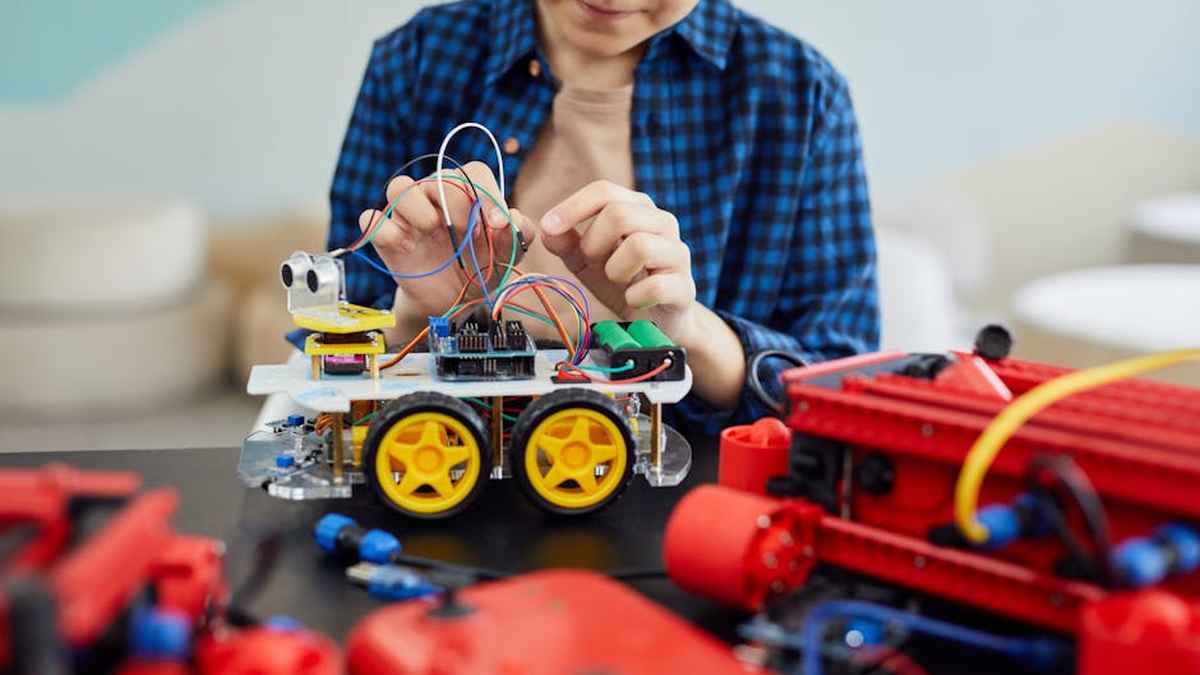
At its core, the TerraBot Explorer Kit is a modular robotics platform that allows children to build, program, and interact with their own robot. It typically comprises a main control unit, various motors, sensors (such as obstacle detection, line-following, or light sensors), structural components, and a companion app for programming. The kit is designed to guide children through the assembly process, followed by an intuitive block-based coding environment, enabling them to bring their robot to life and execute various commands and missions.
Key Features
- Modular Construction: The kit features snap-together components, allowing for multiple robot configurations (e.g., rover, forklift, security bot) from a single set of parts. This encourages creativity and understanding of mechanical principles.
- Block-Based Coding Interface: Utilizing an intuitive drag-and-drop visual programming language, similar to Scratch, the TerraBot app makes coding accessible for beginners. Kids can command motors, read sensor inputs, and create complex sequences.
- Interactive Sensors: Equipped with essential sensors, the TerraBot can detect obstacles, follow lines, react to light, and potentially respond to sound, offering a tangible understanding of input/output systems.
- App-Controlled Driving & Programming: Beyond coding, the robot can often be driven directly via the companion app, providing immediate gratification and a playful entry point before diving into programming.
- Curriculum-Aligned Activities: Many versions include a series of guided challenges or missions that progressively teach new coding concepts and engineering principles, aligning with STEM educational standards.
- Durable Components: Designed for repetitive building and play by young hands, the parts are generally robust and made from child-safe materials.
Pros and Cons
Pros
- Exceptional Educational Value: Effectively teaches fundamental concepts of robotics, engineering, and computational thinking in an engaging, hands-on manner.
- High Replayability: The ability to build different robots and program diverse functions keeps children engaged over time, extending the product’s lifespan beyond initial assembly.
- User-Friendly for Beginners: The block-based coding is incredibly intuitive, lowering the barrier to entry for young children and those new to programming.
- Fosters Problem-Solving: Challenges and guided activities encourage children to think critically and debug their code or structural designs.
- Clear Instructions & Support: Typically comes with well-illustrated assembly guides and app tutorials, making the learning process smoother for both kids and parents.
- Solid Build Quality: Components are generally sturdy, designed to withstand the rigors of child’s play.
Cons
- Price Point: Often positioned at a premium price, which can be a significant investment for many families.
- Potential Learning Curve for Younger End (7-8): While beginner-friendly, some younger users might require initial parental assistance to grasp coding concepts or troubleshooting.
- Dependency on Smart Device: Requires a compatible tablet or smartphone to operate the app, which might be a drawback for families looking to limit screen time.
- Battery Life: As with many electronic toys, rechargeable batteries are often recommended, and run time can vary, sometimes requiring frequent recharges during extended play.
- Advanced Coding Limitations: While excellent for beginners, older children (9-10) who quickly master block coding may soon desire more advanced programming capabilities not always offered by the standard kit.
Who Should Buy This
- Parents in the USA seeking a substantive, educational STEM toy that offers genuine learning experiences.
- Children aged 7-10 who demonstrate an interest in building, robots, puzzles, or how things work.
- Families looking for an engaging, hands-on activity that promotes critical thinking and problem-solving skills.
- Those who value a product with high replayability and the potential for extended learning over time.
- Gift-givers looking for a memorable and impactful educational present that stands out from typical toys.
Who Should Avoid This
- Parents operating on a very strict budget, as the TerraBot Explorer Kit represents a notable financial commitment.
- Children with extremely short attention spans who may quickly lose interest in assembly or structured coding challenges.
- Families strictly avoiding screen time, as the robot heavily relies on a companion app for programming and control.
- Kids who already possess advanced coding skills (e.g., comfortable with Python or JavaScript) may find the block-based system too simplistic.
- Individuals seeking a purely “build once and play” toy without any programming or iterative problem-solving involvement.
Pricing Insight
The TerraBot Explorer Kit typically falls into the higher-tier segment for children’s educational robots, often ranging from $150 to $250 USD, depending on the specific model, included components, and retailer. While this is a significant investment, it’s generally commensurate with the quality of materials, the depth of the educational experience, and the technological sophistication involved. Savvy buyers in the USA might find occasional discounts during major sales events like Black Friday, Cyber Monday, or Prime Day. Considering it as an educational tool rather than merely a toy helps frame its value proposition. We recommend checking current prices from reputable online retailers to find the best available offer. Related: Best AI-Powered STEM Toys for Future-Ready Kids in USA (2026)
Comparison with 1 Alternative: LEGO MINDSTORMS Robot Inventor
When considering alternatives, the LEGO MINDSTORMS Robot Inventor Kit often comes to mind as another prominent contender in the advanced STEM robotics space for similar age groups (recommended 10+, but many 8-9 year olds excel with it). Let’s compare: Related: My Kids Tested the ‘MindSpark Quantum Circuit Kit’: Is This The Hottest STEM Toy for Ages 8-12 in 2024? (Full Review)
TerraBot Explorer Kit
- Target Age: Primarily 7-10 years.
- Build Experience: Often features larger, distinct components designed for straightforward assembly, sometimes with proprietary connection methods. Focus on building specific robot types.
- Coding: Dedicated block-based coding app, highly intuitive for beginners.
- Learning Focus: Excellent introduction to basic robotics, sensors, and foundational coding concepts. Guided missions are common.
- Price: Generally in the $150-$250 USD range.
- Expandability: Good for its specific system, but not as universally compatible as LEGO.
LEGO MINDSTORMS Robot Inventor Kit
- Target Age: Officially 10+, but many younger children with LEGO experience thrive.
- Build Experience: Utilizes the extensive LEGO Technic ecosystem, allowing for virtually limitless creative constructions. Building is often more intricate and time-consuming.
- Coding: Robust block-based coding app (similar to Scratch), with options for more advanced, text-based Python programming for older or more experienced users.
- Learning Focus: Deeper dive into engineering principles, complex mechanical designs, and more advanced programming logic. Greater freedom for open-ended projects.
- Price: Typically higher, often in the $300-$360 USD range.
- Expandability: Benefits from the entire LEGO universe, offering unparalleled potential for customization and expansion.
Verdict on Comparison: If your child is at the younger end (7-8) or new to robotics, the TerraBot Explorer Kit offers a more accessible, guided, and slightly less overwhelming entry point. Its dedicated system simplifies the building and coding process. However, for children closer to 9-10 who already have strong building skills (especially with LEGO) or who quickly master basic coding and seek greater creative freedom and long-term challenge, the LEGO MINDSTORMS Robot Inventor Kit might offer a more expansive and enduring experience, albeit at a higher price point and with a steeper initial learning curve. Related: Best-Selling Interactive STEM Kits & Educational Board Games in USA (2026)
Final Verdict
The TerraBot Explorer Kit stands as a commendable and highly effective educational tool for USA children aged 7 to 10. It expertly balances engaging play with substantive learning, making complex STEM concepts accessible and enjoyable. Its modular design, intuitive block-based coding, and well-structured activities provide a robust foundation in robotics and computational thinking. Related: Magna-Tiles vs. PicassoTiles: Detailed USA Comparison for Choosing the Top Magnetic Tiles for Young Builders (Ages 3-8)
While the investment is significant, the kit’s high replayability and the valuable skills it imparts often justify the cost for families committed to fostering their child’s educational development. It is an excellent choice for children showing an early interest in technology, building, or problem-solving, and for parents who wish to provide a structured yet creative learning environment. For those at the younger end of the age spectrum, some initial parental guidance may be beneficial, but the overall experience is designed for independent discovery. If you’re seeking a top-tier STEM robot that truly delivers on its promise of educational engagement, the TerraBot Explorer Kit is undoubtedly a strong contender worth serious consideration.
Affiliate Disclosure: This review may contain affiliate links, which means we may earn a commission if you make a purchase through our links, at no extra cost to you.