




<!DOCTYPE html>
<html lang="en">
<head> Related: Notion vs. Asana: Choosing the Best Productivity System for USA Small Businesses & Teams.
<meta charset="UTF-8"> Related: ReMarkable 2 vs. Kindle Scribe: The Ultimate E-Ink Tablet Comparison for US Productivity & Study.
<meta name="viewport" content="width=device-width, initial-scale=1.0"> Related: The [Specific Study Technique Book] Reviewed: My Personal Test to See If It Boosts Learning for US College Students
<title>Atomic Habits vs. Deep Work: Which Bestseller Best Boosts Focus for US Professionals?</title> Related: Grammarly vs. ProWritingAid: Best AI Writing Assistant for USA Authors and Content Creators?
</head> Related: In-Depth Review of The [Memory Improvement Program]: Can It Actually Enhance Recall for Older Americans?
<body>
<h1>Atomic Habits vs. Deep Work: Which Bestseller Best Boosts Focus for US Professionals?</h1>
<h2>Introduction</h2>
<p>In the relentless pace of modern professional life, the ability to maintain focus and execute high-value work is paramount. US professionals, constantly navigating a landscape of digital distractions, demanding workloads, and evolving priorities, seek effective strategies to enhance their productivity and mental clarity. Two prominent bestsellers, James Clear’s "Atomic Habits" and Cal Newport’s "Deep Work," offer compelling, albeit distinct, frameworks for achieving precisely that. "Atomic Habits" champions the power of marginal gains through consistent, small improvements, while "Deep Work" advocates for intense, uninterrupted concentration on cognitively demanding tasks. This analysis will dissect each book’s methodology, practical applicability, and suitability for the unique challenges faced by American professionals aiming to sharpen their focus and elevate their output.</p>
<h2>Comparison Table</h2>
<table border="1" cellpadding="10" cellspacing="0">
<thead>
<tr>
<th>Feature</th>
<th>Atomic Habits (James Clear)</th>
<th>Deep Work (Cal Newport)</th>
</tr>
</thead>
<tbody>
<tr>
<td>Core Focus</td>
<td>Systematic habit formation for incremental self-improvement</td>
<td>Sustained, undistracted concentration on a single task</td>
</tr>
<tr>
<td>Primary Goal</td>
<td>Build better systems to achieve remarkable results over time</td>
<td>Produce high-quality, valuable output in less time</td>
</tr>
<tr>
<td>Key Concept</td>
<td>The Four Laws of Behavior Change (Make it Obvious, Attractive, Easy, Satisfying)</td>
<td>Cultivating the ability to work deeply and eliminate shallow work</td>
</tr>
<tr>
<td>Approach to Focus</td>
<td>Indirect, by optimizing the environment and routine to support focused work</td>
<td>Direct, through dedicated blocks of uninterrupted, high-intensity concentration</td>
</tr>
<tr>
<td>Time Horizon</td>
<td>Long-term, compounding effects of small habits</td>
<td>Medium-term, immediate impact on current projects, long-term skill development</td>
</tr>
<tr>
<td>Ideal for Professionals</td>
<td>Seeking sustainable personal and professional growth, overcoming procrastination, building consistent routines</td>
<td>Requiring intensive problem-solving, creative output, strategic thinking; combating constant interruptions</td>
</tr>
</tbody>
</table>
<h2>Atomic Habits: An Overview</h2>
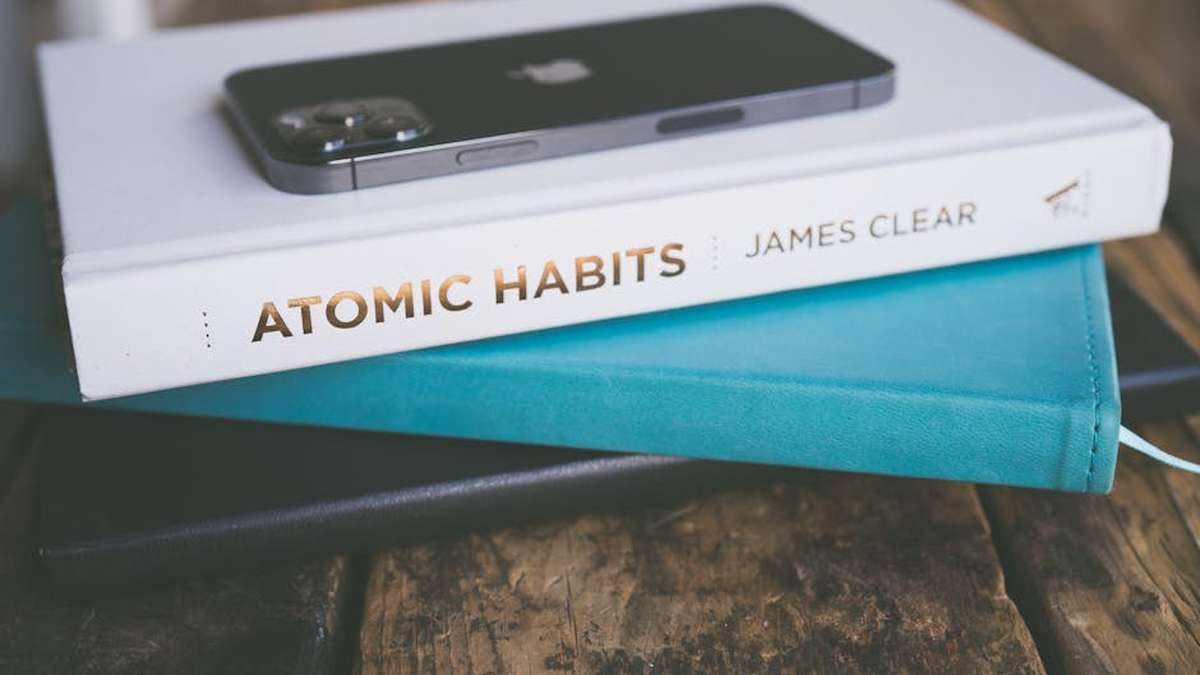
<p>Published in 2018 by James Clear, "Atomic Habits: An Easy & Proven Way to Build Good Habits & Break Bad Ones" posits that significant personal and professional transformation stems not from monumental shifts, but from the aggregation of marginal gains. Clear introduces the concept of "1% better every day," demonstrating how tiny, consistent improvements compound over time to yield remarkable results. The book outlines a practical, four-step framework—Make It Obvious, Make It Attractive, Make It Easy, and Make It Satisfying—for designing environments and routines that facilitate good habits and dismantle bad ones. For US professionals, this translates into building systems for consistent learning, effective project management, improved communication, and, crucially, sustained focus by subtly nudging behavior towards desired outcomes.</p>
<h2>Deep Work: An Overview</h2>
<p>Authored by Cal Newport and released in 2016, "Deep Work: Rules for Focused Success in a Distracted World" argues that the ability to concentrate deeply on a cognitively demanding task without distraction is an increasingly rare and valuable skill in the modern economy. Newport defines "deep work" as professional activities performed in a state of distraction-free concentration that push your cognitive capabilities to their limit. This effort creates new value, improves your skill, and is hard to replicate. Conversely, "shallow work" consists of non-cognitively demanding logistical tasks, often performed while distracted, that don’t create much new value. The book provides actionable strategies to cultivate deep work habits, such as scheduling deep work blocks, embracing boredom, and carefully managing digital tools, directly addressing the challenge of maintaining focus amidst the pervasive distractions prevalent in US corporate culture.</p>
<h2>Feature Comparison</h2>
<h3>Methodology & Approach</h3>
<ul>
<li><strong>Atomic Habits:</strong> Focuses on systemic changes to environment and identity. It’s about designing your life so good habits (like focusing) are the default. The approach is bottom-up, starting with small, almost imperceptible changes that build momentum.</li>
<li><strong>Deep Work:</strong> Emphasizes intentional scheduling and protective measures against distractions. It’s about carving out dedicated time and space for intense cognitive effort. The approach is top-down, demanding a deliberate commitment to deep work principles.</li>
</ul>
<h3>Time Management Aspect</h3>
<ul>
<li><strong>Atomic Habits:</strong> Advocates for habit stacking and consistent routines. While not explicitly a time management book, its principles naturally lead to better time allocation by making productive behaviors habitual. For example, scheduling a "focus session" daily at the same time until it becomes automatic.</li>
<li><strong>Deep Work:</strong> Directly addresses time management through scheduled deep work blocks (monastic, journalistic, rhythmic, or bifocal philosophies). It’s about prioritizing and protecting significant chunks of time for cognitively demanding tasks, treating focus as a limited resource to be deliberately deployed.</li>
</ul>
<h3>Impact on Productivity</h3>
<ul>
<li><strong>Atomic Habits:</strong> Enhances overall, sustained productivity by creating a frictionless path to desired actions. It makes it easier to start and stick with productivity-boosting behaviors, leading to a steady, incremental improvement in output quality and quantity over the long run.</li>
<li><strong>Deep Work:</strong> Directly targets high-leverage productivity by enabling the completion of complex tasks more effectively and efficiently. It’s about generating breakthrough results and developing expertise that differentiates professionals in competitive US markets, leading to fewer but more impactful deliverables.</li>
</ul>
<h3>Mindset Shift</h3>
<ul>
<li><strong>Atomic Habits:</strong> Fosters a growth mindset focused on identity-based habits ("I am a person who focuses"). It promotes patience, consistency, and a belief in the power of small changes to shape one’s character and capabilities.</li>
<li><strong>Deep Work:</strong> Cultivates a mindset that values intellectual rigor and a disdain for distraction. It challenges the prevailing culture of constant connectivity and shallow multitasking, advocating for a return to meaningful, focused engagement with work.</li>
</ul>
<h3>Practicality & Implementability for US Professionals</h3>
<ul>
<li><strong>Atomic Habits:</strong> Highly adaptable. Its principles can be applied in almost any professional setting, from individual contributors to team leaders. The emphasis on subtle environmental design and habit stacking makes it easier to integrate into existing, often chaotic, work routines without requiring drastic overhauls.</li>
<li><strong>Deep Work:</strong> Can be challenging to implement in typical US open-plan offices, highly collaborative environments, or roles requiring constant client/team interaction. It demands significant personal discipline and often requires negotiating boundaries, which can be difficult for professionals concerned about visibility or responsiveness.</li>
</ul>
<h2>Pros and Cons</h2>
<h3>Atomic Habits</h3>
<p><strong>Pros:</strong></p>
<ul>
<li><strong>Accessible and Gradual:</strong> Its "1% better" philosophy makes habit formation feel achievable, reducing the intimidation often associated with significant change.</li>
<li><strong>Sustainable Results:</strong> Focuses on building robust systems that lead to lasting change, rather than relying on willpower.</li>
<li><strong>Comprehensive:</strong> Applicable across all aspects of a professional’s life, from health and personal development to specific work tasks.</li>
<li><strong>Environment-Centric:</strong> Provides practical strategies for designing a work environment that naturally encourages focus and productivity.</li>
</ul>
<p><strong>Cons:</strong></p>
<ul>
<li><strong>Patience Required:</strong> Results can be slow to manifest, which might deter professionals seeking immediate improvements in intense focus.</li>
<li><strong>Less Prescriptive on "Deep" Focus:</strong> While it helps build habits that support focus, it doesn’t offer specific techniques for intense, multi-hour concentration blocks as directly as "Deep Work".</li>
<li><strong>Can Feel Overly Simplistic:</strong> Some might find the "small habits" approach underestimates the difficulty of breaking deeply ingrained bad professional habits or overcoming systemic workplace distractions.</li>
</ul>
<h3>Deep Work</h3>
<p><strong>Pros:</strong></p>
<ul>
<li><strong>High-Impact Output:</strong> Directly enables the production of significant, high-quality work that drives career advancement and innovation.</li>
<li><strong>Skill Development:</strong> Actively trains the brain to sustain concentration, a critical skill in complex professional roles.</li>
<li><strong>Clear Distraction Management:</strong> Offers explicit strategies for combating digital overload and the "hyperactive hive mind" culture prevalent in many US offices.</li>
<li><strong>Valuable in Knowledge Economy:</strong> The ability to master hard things quickly and produce at an elite level is a distinct competitive advantage for professionals.</li>
</ul>
<p><strong>Cons:</strong></p>
<ul>
<li><strong>Challenging Implementation:</strong> The monastic approach to work can be difficult to reconcile with collaborative team structures, frequent meetings, and open-plan offices common in US workplaces.</li>
<li><strong>Requires Significant Discipline:</strong> Demands a high degree of self-control and intentionality, which can be exhausting to maintain consistently.</li>
<li><strong>Potential for Isolation:</strong> Strict adherence might lead to reduced informal communication, potentially affecting team dynamics or professional networking.</li>
<li><strong>Less Applicable to "Shallow" Work:</strong> Doesn’t directly address how to make the necessary but less demanding tasks more efficient or enjoyable, potentially creating a divide between deep and shallow work.</li>
</ul>
<h2>Which One is Better For Whom?</h2>
<ul>
<li><strong>Choose "Atomic Habits" if:</strong></li>
<ul>
<li>You struggle with consistency and want to build a foundational system for personal and professional growth.</li>
<li>You are overwhelmed by the idea of radical changes and prefer gradual, sustainable improvements.</li>
<li>Your professional role requires a broad range of tasks, and you want to build habits for better organization, learning, and routine productivity.</li>
<li>You want to subtly reshape your environment to make focused work and other productive behaviors easier to initiate and maintain.</li>
<li>You are looking to ingrain habits like planning, focused listening during meetings, or consistent learning.</li>
</ul>
<li><strong>Choose "Deep Work" if:</strong></li>
<ul>
<li>You are an US professional whose work involves complex problem-solving, creative ideation, strategic planning, or intensive analytical tasks.</li>
<li>You are constantly battling distractions (emails, Slack, social media, meetings) and need a robust framework to reclaim your concentration.</li>
<li>You aim to produce truly impactful, differentiating work and develop valuable skills that set you apart in your industry.</li>
<li>You are prepared to make deliberate, sometimes challenging, choices about how you allocate your time and attention.</li>
<li>Your role allows for dedicated blocks of uninterrupted time, or you have the agency to create such conditions (e.g., remote workers, entrepreneurs, senior leaders).</li>
</ul>
<h2>Final Verdict</h2>
<p>For US professionals striving to boost their focus, both "Atomic Habits" and "Deep Work" offer immense value, acting as complementary guides rather than mutually exclusive philosophies. <strong>"Atomic Habits" serves as the foundational operating system</strong>, helping to install the underlying routines and environmental cues that make focused work a natural extension of one’s daily life. It’s about setting yourself up for success by making the path of least resistance the path of productivity. <strong>"Deep Work," on the other hand, is the specialized application</strong> that provides the specific techniques and mindset for excelling in high-cognitive-demand tasks. It teaches you how to maximize the potential of those focused moments that "Atomic Habits" helps you consistently create.</p>
<p>Ultimately, the most effective approach for an American professional seeking sustained focus and high performance is likely a <strong>hybrid strategy</strong>. Use the principles of "Atomic Habits" to build the consistent routines that *enable* deep work sessions (e.g., a habit of planning your deep work, clearing distractions before a session, or reviewing progress). Then, leverage the specific methodologies of "Deep Work" to execute those sessions with maximum intensity and effectiveness. By combining Clear’s gentle, systemic nudges with Newport’s disciplined, intense concentration, US professionals can cultivate an unparalleled ability to focus, innovate, and achieve their most ambitious goals in an increasingly distracted world.</p>
</body>
</html>
As a busy US professional, which book offers more immediate and actionable strategies for improving focus on demanding work tasks?
“Atomic Habits” provides a framework for building small, consistent habits that can lead to significant improvements in focus over time, ideal for integrating into a daily work routine. “Deep Work” offers more intensive, structured strategies for creating uninterrupted focus periods, which can be highly effective for project-based work requiring sustained concentration. Your choice depends on whether you prefer gradual integration or dedicated deep work blocks.
I have limited time outside of work to dedicate to new routines. Which book will offer me the most practical focus techniques with the quickest path to implementation?
“Atomic Habits” focuses on making tiny changes that are easy to start and stick with, requiring minimal initial time investment. Its emphasis on “2-minute rules” and habit stacking makes it highly accessible for busy schedules. “Deep Work” requires more intentional restructuring of your day to carve out dedicated focus blocks, which might demand a slightly larger initial time commitment to implement effectively, though the payoff can be substantial.
My biggest challenge is constant distractions and struggling to initiate or complete high-value projects due to procrastination. Which book provides better solutions for these specific professional hurdles?
“Deep Work” directly confronts the challenge of distraction by advocating for dedicated, uninterrupted periods of intense focus, providing strategies to minimize external interruptions and maximize cognitive output. It’s excellent for tackling complex, high-value work. While “Atomic Habits” can indirectly help by building habits to overcome procrastination (e.g., “start with 2 minutes”), “Deep Work” offers a more frontal assault on creating the environment and mindset needed for sustained, distraction-free effort on critical projects.
I’m looking for sustainable strategies to not just improve daily focus, but also to significantly enhance my long-term professional productivity and career trajectory. Which book offers a more foundational approach for lasting impact?
Both books offer foundational principles, but for different aspects. “Atomic Habits” builds a foundation of consistent, small improvements across all areas of your life, including work, leading to compounding growth over years. “Deep Work” establishes a foundational understanding of how to produce high-quality, impactful work by creating and protecting deep focus periods, which is crucial for mastering complex skills and standing out professionally. “Atomic Habits” is about consistently doing the work, while “Deep Work” is about making the work you do count more significantly.
Related Products
- Rocketbook vs. ReMarkable 2: The Ultimate Digital Notebook Showdown for American Students
- Skillshare vs. Coursera: Best Online Learning Platform for USA Tech Career Transitions?
- The [Academic Resource Book] Examined: Does It Provide Essential Support for US High Schoolers Tackling AP Tests?
- Real-World Review: [Specific Focus App] – The Key to Undistracted Work for Creatives Across the USA?
- My Take on The [Specific Goal-Setting Journal]: A US Perspective on Achieving Ambitious Personal & Career Milestones