




Introduction
The battle for living room supremacy continues fiercely in 2024, with Sony’s PlayStation 5 and Microsoft’s Xbox Series X standing as the two premier next-generation gaming consoles. Both systems promise unparalleled graphics, lightning-fast load times, and immersive gaming experiences. For USA buyers, the choice between these two powerful machines often comes down to more than just raw specifications; it involves evaluating exclusive game libraries, subscription services, controller innovations, and personal ecosystem preferences. This detailed comparison aims to cut through the noise, providing a data-driven review to help consumers make an informed decision based on their individual gaming habits and budget.
Comparison Table
| Feature | PlayStation 5 (Disc Edition) | Xbox Series X |
|---|---|---|
| Release Date | November 12, 2020 (USA) | November 10, 2020 (USA) |
| Current MSRP (2024)* | $499.99 | $499.99 |
| CPU | 8-core AMD Zen 2 CPU @ 3.5GHz (variable frequency) | 8-core AMD Zen 2 CPU @ 3.8GHz (3.66GHz with SMT) |
| GPU | 10.28 TFLOPs, 36 CUs @ 2.23GHz (variable frequency) | 12 TFLOPs, 52 CUs @ 1.825GHz |
| RAM | 16GB GDDR6 | 16GB GDDR6 |
| Internal Storage | 825GB Custom NVMe SSD (667GB usable) | 1TB Custom NVMe SSD (802GB usable) |
| Expandable Storage | NVMe SSD slot (PCIe Gen4) | 1TB Seagate/WD Black Expansion Card (proprietary slot) |
| Optical Drive | 4K UHD Blu-ray Drive | 4K UHD Blu-ray Drive |
| Resolution Support | Up to 8K, 4K/120Hz | Up to 8K, 4K/120Hz |
| Key Exclusive Games (Examples) | Marvel’s Spider-Man 2, God of War Ragnarök, Horizon Forbidden West, Gran Turismo 7 | Halo Infinite, Forza Motorsport, Starfield, Senua’s Saga: Hellblade II (also on PC) |
| Subscription Service | PlayStation Plus (Essential, Extra, Premium) | Xbox Game Pass (Core, Console, PC, Ultimate) |
| Backwards Compatibility | Most PS4 games | Thousands of Xbox One, Xbox 360, and original Xbox games |
| Controller Innovation | DualSense (haptic feedback, adaptive triggers) | Refined Xbox Wireless Controller (improved D-pad, textured grips) |
| Design | Large, futuristic, white & black chassis | Monolithic, minimalist, black tower |
*Prices are MSRP as of Q2 2024 and may vary by retailer or bundles. PlayStation 5 Digital Edition is also available at a lower MSRP.
PlayStation 5 Overview
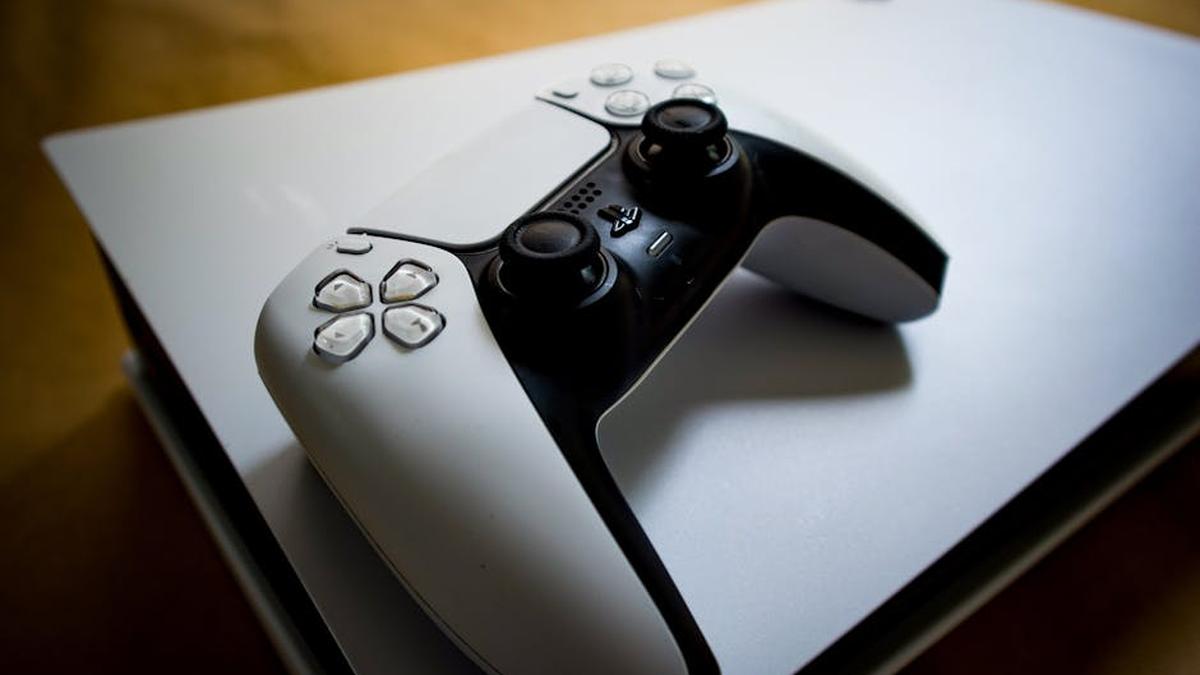
The PlayStation 5, released by Sony Interactive Entertainment, immediately captivated gamers with its striking, futuristic design and the innovative DualSense wireless controller. At its core, the PS5 boasts a custom AMD Zen 2 CPU and RDNA 2 GPU, coupled with a revolutionary 825GB custom SSD. This SSD is not just about raw speed; its custom I/O solution allows for incredibly fast asset streaming, virtually eliminating load times in many games and enabling new game design possibilities.
Related: Steam Deck OLED Review: The Best Portable PC Gaming Handheld for 2024?
The console’s strength lies in its ecosystem, particularly its robust library of critically acclaimed first-party exclusive titles like Marvel’s Spider-Man 2, God of War Ragnarök, and Horizon Forbidden West. These titles often leverage the unique features of the DualSense controller, providing immersive haptic feedback and adaptive trigger resistance that enhance gameplay. The PS5 also supports PlayStation VR2, offering a high-end virtual reality experience.
Related: Samsung Odyssey G9 OLED vs Alienware AW3423DWF: Ultrawide QD-OLED Monitor Showdown
Available in two models – the standard Disc Edition with a 4K UHD Blu-ray drive and the Digital Edition without it – the PS5 caters to both physical and digital game collectors. The PlayStation Plus subscription service, with its tiered offerings (Essential, Extra, Premium), provides access to a growing library of games, online multiplayer, and cloud streaming.
Related: Steam Deck OLED vs ROG Ally X: Handheld PC Gaming Performance Comparison
Xbox Series X Overview
Microsoft’s Xbox Series X is a powerhouse designed with raw performance and an expansive ecosystem in mind. It features a more powerful 12 TFLOPS AMD RDNA 2 GPU and a slightly faster Zen 2 CPU compared to the PS5, along with a 1TB custom NVMe SSD. This hardware is packed into a minimalist, tower-like design optimized for efficient cooling.
Related: Logitech G Pro X Superlight 2 vs Razer DeathAdder V3 Pro: Best Wireless Lightweight Gaming Mouse?
The Series X’s major selling point is the Xbox Game Pass Ultimate service, often hailed as the “Netflix of gaming.” It offers day-one access to all first-party Xbox titles, a vast library of third-party games, EA Play, cloud gaming, and Xbox Live Gold benefits. This provides immense value for players who enjoy exploring a wide range of games without purchasing each title individually.
Related: SteelSeries Apex Pro TKL Wireless (2023) Review: Best OmniPoint Keyboard for Fast-Paced Gaming?
Microsoft has also prioritized industry-leading backwards compatibility, allowing players to enjoy thousands of games from four generations of Xbox consoles, often with visual and performance enhancements. While its exclusive lineup has historically been seen as less impactful than PlayStation’s, major acquisitions like Bethesda and Activision Blizzard are poised to significantly bolster its first-party offerings with games like Starfield and future Call of Duty titles. The Xbox Wireless Controller, while not as innovative as the DualSense, is a refined version of an already excellent design.
Feature Comparison
Performance: Power vs. Prowess
On paper, the Xbox Series X holds a slight edge in raw computational power with 12 TFLOPs of GPU power compared to the PS5’s 10.28 TFLOPs, alongside a marginally faster CPU. However, the PS5’s custom SSD and I/O architecture are designed for unparalleled data streaming, which can sometimes result in faster load times and allows developers to optimize games in unique ways. In real-world gaming, both consoles are capable of rendering stunning 4K visuals at high frame rates, with many games targeting 60fps and some even reaching 120fps. The difference in visual fidelity is often negligible to the average player, with developers doing an excellent job optimizing for both platforms.
Storage: Internal & Expansion
The Xbox Series X comes with a larger 1TB internal SSD (802GB usable) compared to the PS5’s 825GB (667GB usable). Both are proprietary NVMe SSDs ensuring fast speeds. For expansion, the PS5 uses a standard M.2 NVMe SSD slot (PCIe Gen4) allowing consumers to choose from various third-party drives, provided they meet Sony’s speed requirements. The Xbox Series X, conversely, uses a proprietary expansion card slot that currently only accepts Seagate and WD Black drives, which are typically more expensive per GB but offer plug-and-play simplicity matching internal drive performance.
Design & Controller: Aesthetics & Innovation
The PS5 features a bold, almost sculptural design that stands out, but its size can be a challenge for some entertainment setups. The Xbox Series X opts for a more subdued, monolithic tower design that blends in discreetly. The PS5’s DualSense controller is a major innovation, offering advanced haptic feedback and adaptive triggers that provide a new level of immersion, reacting dynamically to in-game actions. The Xbox Wireless Controller, while lauded for its ergonomics and comfort, is a more refined evolution of previous designs, lacking the DualSense’s groundbreaking features.
Games & Exclusives: Quality vs. Quantity/Value
This is arguably the most significant differentiator. PlayStation 5 has a stronger track record of critically acclaimed, cinematic first-party exclusives (e.g., God of War Ragnarök, The Last of Us Part I, Horizon Forbidden West, Marvel’s Spider-Man 2) that are often system-sellers. Xbox Series X, while building its first-party portfolio (e.g., Halo Infinite, Forza Motorsport, Starfield), truly shines with its Xbox Game Pass Ultimate service, which offers an unparalleled library of hundreds of games, including all first-party titles on day one, for a monthly fee. This offers immense value and variety, making it a powerful draw for budget-conscious gamers or those who play many different titles.
Ecosystem & Services: PS Plus vs. Game Pass
PlayStation Plus offers tiered subscriptions (Essential, Extra, Premium) providing online multiplayer, monthly free games, and access to a catalog of PS4/PS5 games (Extra/Premium tiers) and classic PlayStation titles (Premium). Xbox Game Pass Ultimate is a more comprehensive offering, including Game Pass for Console, PC Game Pass, Xbox Live Gold, EA Play, and cloud gaming, making it a highly compelling value proposition, especially for those who also game on PC. Microsoft’s commitment to cloud gaming also provides greater flexibility for playing games on the go.
Backwards Compatibility
Both consoles offer backwards compatibility, but Xbox Series X has a significant advantage. It supports thousands of games across four generations of Xbox consoles (Original Xbox, Xbox 360, Xbox One, and Series X/S), often with enhancements like Auto HDR and FPS Boost. The PS5 is primarily backwards compatible with most PS4 titles, with a smaller selection receiving “Game Boost” enhancements.
Pros and Cons
PlayStation 5
Pros:
- Exceptional First-Party Exclusives: Consistently delivers highly-rated, cinematic, single-player experiences.
- Innovative DualSense Controller: Haptic feedback and adaptive triggers offer unique immersion.
- Blazing-Fast Custom SSD: Near-instant load times enhance the gaming flow.
- Strong VR Ecosystem: PSVR2 offers a high-fidelity virtual reality option.
- Sleek, Futuristic Design: A distinctive console that stands out.
Cons:
- Bulky Design: Its large size and unconventional shape can be challenging for some setups.
- Storage Expansion Cost: While flexible, compatible NVMe SSDs can be expensive.
- PS Plus Value: While good, often perceived as less comprehensive than Xbox Game Pass Ultimate.
- Limited Backwards Compatibility: Primarily supports PS4 games, fewer older titles.
- Availability: While improved, can still be subject to regional stock fluctuations.
Xbox Series X
Pros:
- Unbeatable Game Pass Value: Day-one first-party games, massive library, cloud gaming.
- Industry-Leading Backwards Compatibility: Play thousands of games across four generations of Xbox.
- Raw Performance: Slightly more powerful GPU on paper, ensures excellent performance.
- Streamlined Ecosystem: Seamless integration with PC and cloud gaming.
- User-Friendly Storage Expansion: Proprietary card is simple plug-and-play.
Cons:
- Fewer “Must-Have” Exclusives (Historically): While improving, its exclusive lineup has been less impactful than PlayStation’s.
- Controller Lacks Innovation: Refined but doesn’t offer the unique features of the DualSense.
- Proprietary Storage Expansion Cost: Though convenient, proprietary cards are generally more expensive.
- Less Focus on VR: No dedicated VR headset or platform.
- User Interface: Can feel less intuitive or more cluttered to some users.
Which One Is Better For Whom?
- Choose the PlayStation 5 if:
- You prioritize exclusive, cinematic, single-player story-driven games (e.g., God of War, Spider-Man, Horizon).
- You want an innovative and immersive controller experience with haptic feedback and adaptive triggers.
- You are interested in high-fidelity VR gaming with PlayStation VR2.
- You are already invested in the PlayStation ecosystem and have a library of PS4 games.
- You prefer buying physical game discs.
- Choose the Xbox Series X if:
- You want the absolute best value for money through Xbox Game Pass Ultimate, which includes hundreds of games.
- You play a wide variety of games, including multi-platform and older titles from previous Xbox generations.
- You appreciate a seamless cross-platform experience (playing games on console, PC, and via cloud streaming).
- You prefer a more traditional, refined controller design.
- You want to maximize backwards compatibility across your gaming library.
Final Verdict
In 2024, both the PlayStation 5 and Xbox Series X are exceptional next-generation gaming consoles that deliver powerful performance and incredible gaming experiences. There isn’t a single “winner” that universally applies to every USA buyer; instead, the best choice hinges entirely on individual preferences and priorities.
The PlayStation 5 shines with its unparalleled first-party exclusive titles and the truly innovative DualSense controller, offering unique levels of immersion that are unmatched. If you crave those exclusive, highly polished narrative-driven games and want to feel truly connected to the gameplay, the PS5 is likely your best bet.
The Xbox Series X, on the other hand, stands out for its incredible value proposition through Xbox Game Pass Ultimate and its expansive, industry-leading backwards compatibility. If you’re a gamer who loves to explore a vast library of games without breaking the bank, or if you appreciate the flexibility of a seamless cross-platform ecosystem, the Series X offers an unbeatable package.
Ultimately, consider which console’s strengths align more closely with your gaming habits and priorities. Both are fantastic machines, and you won’t be disappointed with either choice.
This article provides a comparison based on available data and general consumer trends as of 2024. Specifications, pricing, game availability, and service offerings are subject to change by manufacturers and retailers. Individual experiences may vary.
Which console offers the best exclusive games and ecosystem for USA buyers in 2024?
For USA buyers in 2024, the “best” console for exclusive games depends heavily on your preferred genre. The PlayStation 5 continues to dominate with critically acclaimed, narrative-driven single-player exclusives like Marvel’s Spider-Man 2, God of War Ragnarök, and Horizon Forbidden West. Its ecosystem focuses on premium, cinematic experiences. The Xbox Series X, on the other hand, leans heavily into its Xbox Game Pass service, offering day-one access to its first-party titles such as Starfield, Forza Motorsport, and upcoming releases from Bethesda and Activision Blizzard (post-acquisition), alongside a vast library of third-party games. If you prioritize exclusive blockbuster single-player games, PS5 might edge out. If you prefer a wide variety of games available immediately through a subscription, Xbox’s ecosystem is highly compelling.
How do the subscription services, PlayStation Plus and Xbox Game Pass, compare in value for US gamers?
For US gamers, PlayStation Plus and Xbox Game Pass offer distinct value propositions. Xbox Game Pass Ultimate is generally considered to offer superior day-one value, providing access to all new first-party Xbox games (and soon, many Activision Blizzard titles) on their release day, along with a rotating library of hundreds of third-party games, online multiplayer, and cloud streaming. PlayStation Plus Premium offers online multiplayer, a catalog of hundreds of current-gen and classic games, and time-limited game trials, but generally does not include new PlayStation Studios titles on launch day. While PS Plus offers a strong curated library and monthly free games, Game Pass often represents a better overall value for those who play a wide variety of games, particularly new first-party titles, without needing to purchase them outright.
Are there significant performance or hardware differences between the PS5 and Xbox Series X that impact gameplay for USA users?
While both the PlayStation 5 and Xbox Series X are incredibly powerful consoles designed for 4K gaming, the practical performance differences for USA users in 2024 are often minimal. The Xbox Series X technically boasts slightly more raw GPU power (12 teraflops vs. PS5’s 10.28 teraflops). However, in most cross-platform games, both consoles deliver a very similar experience, targeting 4K resolution at 60fps, often with performance modes offering higher frame rates at slightly reduced resolution. The PS5 features a slightly faster SSD, which can result in marginally quicker load times in some titles. Additionally, the PS5’s DualSense controller offers unique haptic feedback and adaptive triggers, providing a more immersive tactile experience in games that utilize these features. Ultimately, both consoles offer superb performance, and any differences are usually subtle rather than game-changing for the average player.
Considering overall value and future game releases, which console is the better long-term investment for a US gamer in 2024?
The better long-term investment for a US gamer in 2024 depends on your personal gaming habits and preferences. The PlayStation 5 remains a strong investment for players who value premium, exclusive single-player experiences and are willing to purchase games individually, with a continued pipeline of highly anticipated titles from PlayStation Studios. Its robust install base also ensures a vibrant multiplayer community for popular games. The Xbox Series X, bolstered by Xbox Game Pass, offers exceptional long-term value for players who enjoy a vast, evolving library of games and prefer the subscription model. Microsoft’s strategic acquisitions, including Bethesda and Activision Blizzard, promise a steady stream of major new titles coming to Game Pass on day one for years to come. Your decision should ultimately hinge on whether you prioritize PlayStation’s exclusive game library and unique controller features, or Xbox’s comprehensive subscription service and growing first-party content.
Related Products
- Steam Deck OLED Review: The Best Portable PC Gaming Handheld for 2024?
- NVIDIA GeForce RTX 4070 Super Review: Performance & Price for High-End PC Builds in the USA
- Elgato Stream Deck MK.2 Review: Your Essential Companion for Stream Production in 2024
- Shure MV7 Microphone Review: Is This Hybrid USB/XLR Mic The Best For USA Streamers?
- HyperX Cloud III Wireless Headset Review: Comfort, Audio & Value for American Gamers